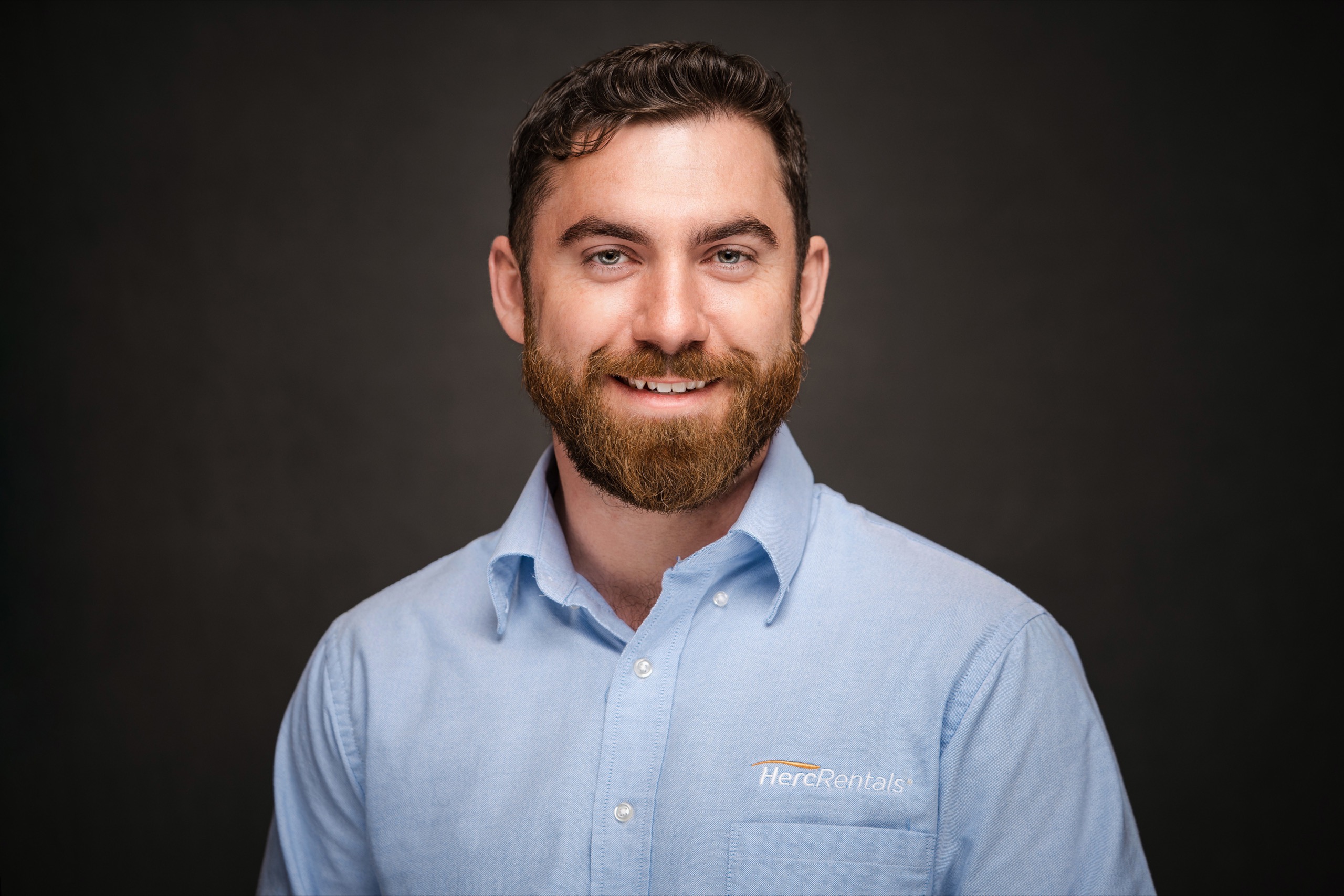



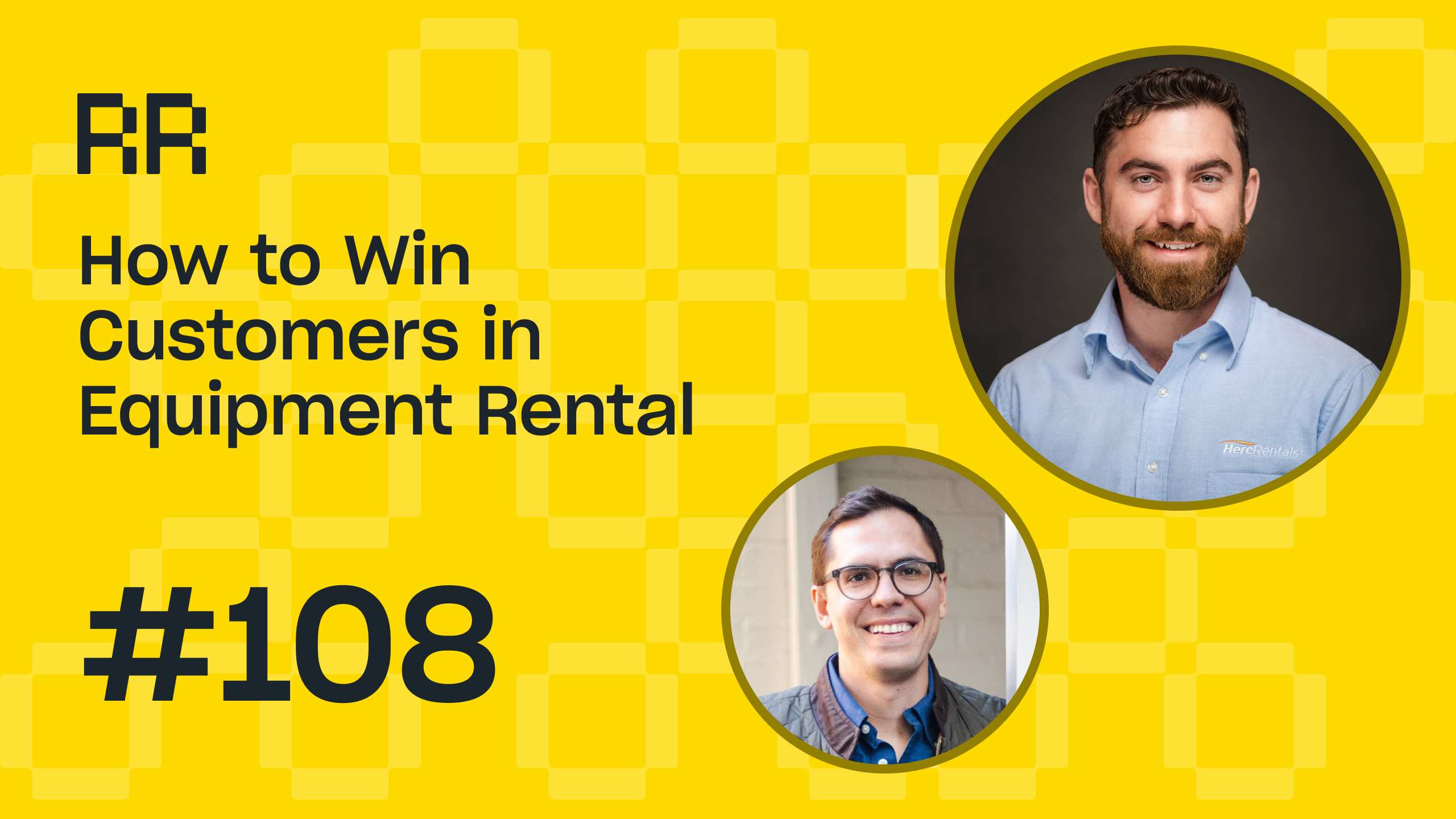
Most rental sales advice sounds the same. Show up, smile, drop off a box of donuts, and ask for the order. Patrick Ferris does almost none of that, and he wins anyway.
Patrick is a sales rep at Herc out of Richmond, Virginia, and he spends about 90% of his time in the field. I sat down with him on episode 108 of The Rental Roundtable to talk about what the job really takes. What makes his story worth your time isn’t that he’s at a national. It’s that everything he does can be copied by a rep at any independent. His approach points straight at what separates the folks who build 30-year careers in rental from the ones who wash out in year one.
If you’re an owner trying to build a sales team that actually grows your revenue, this one reads like a playbook.
Learn the Stages of Construction, Not Just the Equipment
Patrick’s biggest edge has nothing to do with Herc’s fleet size. It’s something he taught himself. Early on, he spent about $200 on construction textbooks covering concrete, framing, electrical, plumbing, land development, and utility hookups. Then he read all of it.
That sounds like overkill until you see what it does. When you know how a job site flows from start to finish, you can see the next phase coming before the customer asks. You know when compaction has to happen before the rain rolls in. You know when temporary heat or cooling is about to be needed. You stop reacting to equipment requests and start anticipating them.
“To me, that’s what’s helped me the most in my career. You can speak the lingo, and not just learn a couple key words to make people’s ears perk. You can actually anticipate the flow of job sites.” Patrick Ferris, Sales Rep at Herc, (8:07)
That’s the difference between speaking the lingo and actually understanding the customer’s world. A rep who knows the stages of construction isn’t selling a machine. He’s helping a superintendent stay on schedule. For an independent competing on service, that kind of knowledge is one of the most teachable edges you have.
Why Trust Is the Whole Game
Knowing the work is step one. Turning that into a sale comes down to something else. Equipment is a commodity, and Patrick said it himself. Anyone can rent out a skid steer. So the real question is why a customer picks one rep over another, and the answer he kept coming back to was trust.
Here’s the part I found honest. Patrick admitted that early in his career, at 25, he sometimes stretched the truth without meaning to. He’d promise a delivery with total confidence, then learn later that he didn’t know everything that went into making it happen. Was the equipment checked out? Was there a truck available? When you don’t yet know the nuances of your own business, you can sound sure of yourself and still be wrong.
“When you know the nuances of the business and what goes into all of it, you can be transparent. And when you’re transparent, you can increase that trust.” Patrick Ferris, (10:46)
That’s a lesson worth handing to every new rep you hire. Trust compounds over years, and it matters even more in a smaller market where everyone knows everyone. It’s also why about 60% of Patrick’s business is repeat customers, folks he grabs lunch with and whose kids’ names he remembers. You don’t build that base with tricks. You build it by being someone people can count on.
Where New Rentals Actually Come From
Repeat business is the foundation, but growth means finding the other 40%. This is where a lot of reps get stuck, and Patrick’s answer is refreshingly unglamorous. He drives to the job site and talks to the superintendent. That’s the gold mine, even when he’s the fourth or fifth person that day asking for a sub list.
He also pays for a local building permit subscription that shows him every permit pulled in the surrounding area. That’s a steady lead stream most reps ignore. And he keeps a no-stone-unturned mindset, pulling over on the highway when he spots a site worth a knock.
“The job sites are the big ones. No stone unturned, stopping on the highway, pulling over. It’s easy to do, and it’s easy not to do.” Patrick Ferris, (13:21)
That last line stuck with me, because it’s true about almost everything in rental. The work that grows your book isn’t complicated. It’s just easy to skip. Most people give up one step early, right before the effort would’ve paid off.
Good tools make that grind lighter. Chasing permits by hand eats time your reps could spend in front of customers. That’s one of the jobs we built Quinn, our AI agent, to handle. It pulls the permits and tells your team who to call next, so your reps spend more of the day doing what Patrick does and less of it digging for names.
The Traits That Separate Reps Who Last
Tools help, but they can’t replace the person. So I asked Patrick what actually makes a rental sales rep successful. He was honest that there’s no perfect formula. He’s seen people he was sure would be great flame out. But a few traits show up again and again: self-awareness, curiosity, and real passion for the work.
Self-awareness matters more than it sounds. After a few road calls, some down equipment, and a couple of upset customers, making the next call is hard. Knowing where your energy is, and how to protect it, is what lets you show up again the next morning.
“If you love what you do, you don’t mind wearing yourself out doing it.” Patrick Ferris, (15:03)
That’s the trait I’d screen for when hiring. You can teach the equipment. You can teach the stages of construction. What you can’t easily teach is someone to want it.
Keeping Your Energy Up in the Field
Passion still needs fuel, and Patrick is deliberate about where he gets it. He runs after work with no phone, just to blow off steam and get an hour to himself. When his motivation dips, he goes back to the books or reads local news about a new Amazon facility or a project in the pipeline. That research doesn’t just teach him something. It gives him a reason to make a specific call with real conviction.
When you know in your gut that a call makes sense because of the homework you did, there’s no resistance. You’re not forcing a sale. You’re solving a problem the customer may not even know they have yet.
Where the Growth Is Heading
Energy is easier to find when the market in front of you is busy, and Patrick’s market is booming. When we talked about where demand is going, data centers came up fast. In Virginia they’re everywhere, and his point was that once you understand how one gets built, it’s rinse and repeat. It’s a big box of servers that needs cooling and water routed through it. The construction pattern is predictable, which makes the equipment demand predictable too.
“It puts a lot of gear on rent for a long time, and then they move on to the next one.” Patrick Ferris, (21:55)
We got into the bigger shifts too, like general contractors standing up their own internal rental fleets and equipment dealers, pushed by private equity money, launching separate rental businesses. Nobody knows exactly how those play out. But rental has been growing at about twice the rate of construction for two decades, and the U.S. is still under-penetrated compared to Europe and Asia. Even in a slower year, the trend line points up. The reps who understand where the work is heading show up before the competition even knows the job exists.
Work to Learn, Not Just to Earn
All of it traces back to one idea. I closed by asking Patrick for the best career advice he’s ever gotten, and his answer tied the whole conversation together.
“Work to learn more than earn, because there’s a lot more to life than just working for a paycheck.” Patrick Ferris, (31:11)
That mindset is the thread running through everything he does, from the $200 stack of books to the permit subscription to the evening runs. He treats the job as a place to grow, not just a place to get paid, and the results follow.
The Takeaway for Owners
The reps who win aren’t the ones with the biggest fleet behind them. They’re the ones who understand the customer better and do the unglamorous work every day. Your job is to hire for that hunger, then give your team tools that get out of their way so they can spend their time in the field instead of fighting their software.
At Quipli, we built our equipment rental software platform for operators who are growing a real business and deserve software that works as hard as their team does. If you’re tired of watching good reps lose hours to busywork, that’s the exact problem we set out to solve.