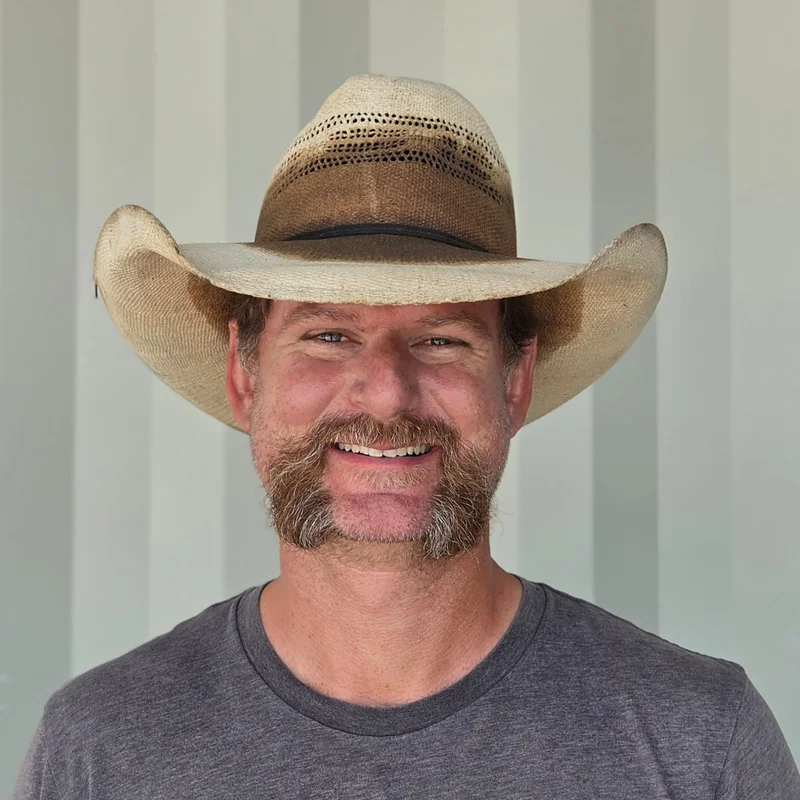



Most people who want to start a rental company get stuck in the same two places: the capital and the risk. They wait for the perfect balance sheet, the fully-formed fleet, the moment it all feels safe. James Polkinghorne did the opposite. He bought one machine, stuck a “rent me” sign on it, and parked it by the highway.
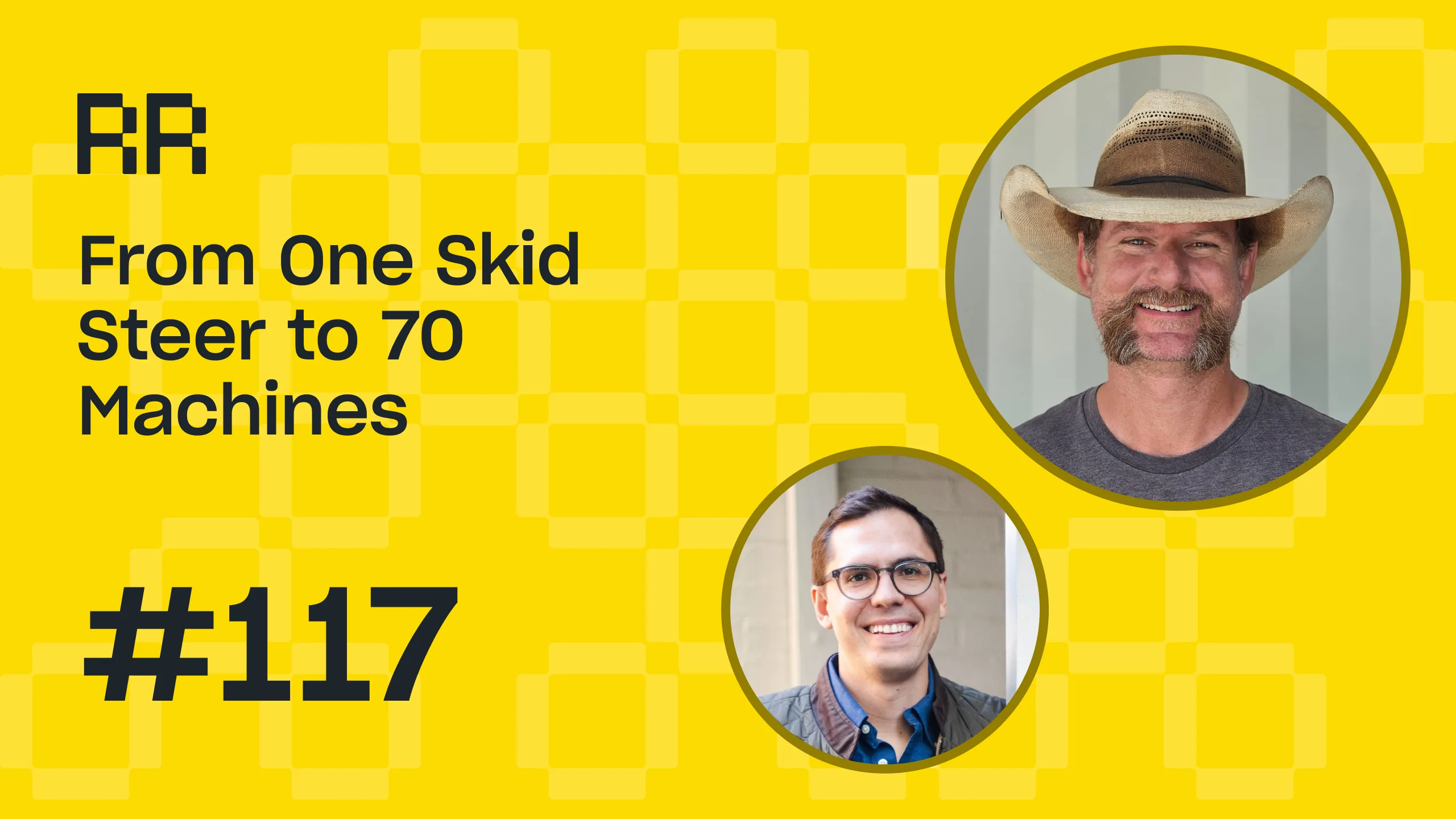
On episode 117 of The Rental Roundtable, I sat down with James, owner of James Equipment in Winchester, Tennessee. He spent most of his career in construction and was running a trailer dealership as general manager when he bought his first skid steer at the end of 2020. He ran the rental business part-time for about four years before going full-time at the start of 2025. Today he is sitting on a fleet of roughly 70 pieces worth just under a million dollars.
If you are staring at the gap between one machine and a real business, this conversation is a map for how to cross it without betting the farm. Here is what stuck with me.
Start Small and Let the Machine Pay for Itself
James did not raise money or buy a yard full of iron. He started with the smallest version of the thing that could possibly work, and he made the asset do the heavy lifting.
What drew him to rental in the first place was the business model. He had looked at owner-operator excavating, but the contracting side is still tied to your own time. Rental leaned harder toward the asset working for you.
“I started really basic. I bought a machine and put rent me sign on it. Put it by the highway and started with... just one skid steer and a trailer and a couple attachments.” James Polkinghorne, Owner of James Equipment, (4:05)
He still checked the real boxes: business license, rental insurance. Humble beginnings, but a real business from day one. The lesson for anyone on the fence is that you do not need scale to start. You need one asset that can earn, and the discipline to run it like it matters.
The Gap That Kills Most New Yards
More than half of the people who try what James tried do not make it five years. I asked him why, and his answer was not about equipment or demand. It was about overhead.
James was fortunate that he did not need the rental revenue for his own income. The trailer-dealership owner let him run the side business while he kept his day job, so the machine only had to cover an insurance payment and an equipment payment. That kept his risk low while the fleet found its feet.
“That gap until you have some momentum on your sales and revenue... to be able to carry that overhead, I would say that’s probably the number one killer.” (8:14)
If you are starting out, protect the runway before you spend on the trappings. Low occupancy cost, no salary you are depending on, and a machine that pays for itself will keep you alive long enough for the compounding to kick in. That is the same quiet math we talked about back in episode 109 on the power of compounding: survive first, and the growth stacks on top of itself.
Find the Market Everyone Else Overlooked
James is not in a major metro. He has about 38,000 people within a 15-mile radius, and the nearest national is 45 minutes away. That sounds like a disadvantage. It was the opposite.
The one other independent in town leaned into homeowner and event rental, which left a clear lane open.
“They focus a lot on homeowner and... event rental. So the contractor market I found to be somewhat underserved.” (9:01)
A small town is not too small if nobody is serving the customer you want. James found a market big enough to build on but not so big it drew a crowd of competitors. Before you write off your area as too rural, look for the segment the incumbents are ignoring. That gap is where an independent wins.
Finance So You Can Always Exit
The capital question is where most zero-to-one stories die. James bootstrapped the whole thing, no outside investors, and built a relationship with a local community bank that understood the ag world he operates in.
The structure he landed on is worth stealing. He buys fresh used rather than new off the lot, so he can always exit at roughly net neutral. And he uses annual notes with nothing down.
“We do the annual note. So I have 12 months till I have to make the payment. And as it rents, as I get some income from revenue on it, I put that revenue towards that... annual payment.” (17:08)
By month nine or ten, either the payment is covered or he sells the machine and exits the note. There is no cash burden the day a new category lands in the yard, which makes it easy to test a man lift or a bigger excavator without staking the business on it. That is how you add a product line and sleep at night.
Give Every Renter a Wow
James grew on road frontage and word of mouth, with Google ads only entering the picture in the last year or two. When your marketing budget is that lean, the experience has to do the selling. So he obsesses over the touch points.
The flow through the yard, the condition of the machine, how fast he supports a customer who breaks down on a weekend. He wants people to leave feeling like that was easy, even fun. My favorite detail was his standard for a clean cab.
“If you have an enclosed cab machine, we want to be clean enough that they can get in and feel like they could take their shoes off... that it’s that clean.” (22:22)
Most yards aim to take a machine from a lot of dirt to a little dirt. James aims for no dirt. That is the kind of standard that turns a one-time renter into a repeat one, and it is the exact edge an independent has over a national counter where you are just a number. Good software helps here too. When the booking, the dispatch, and the support all run clean on a platform like Quipli, the customer feels the same care in the paperwork that James puts into the cab.
Rental Rewards Grit and Figuring It Out
I asked James what traits you actually need to make it in this business. The first word out of his mouth was grit, and he had the scar to prove it: a morning he got up before dawn, drove out, hauled a machine back, prepped it, and staged it for a customer who called to cancel 15 minutes before pickup. The rental space, as he put it, can be pretty thankless. You grind anyway.
After grit came people skills, mechanical ability, and a willingness to learn. But the trait he kept coming back to was the mindset.
“I consider myself a figure outer, as everything’s figure outable.” (27:09)
There is plenty of figuring out to be done in a rental yard, and the operators who thrive are the ones who treat every problem as solvable rather than a reason to stop. If you are mechanically inclined and you refuse to get stuck, you already have the raw material this business rewards.
Build Something Worth Passing Down
James does not come from a family of business owners. That is exactly why building one matters so much to him.
“It always excites me to see a family be able to build something that is able to last for multiple generations.” (28:48)
That legacy is the fuel behind the grit. When the 4 a.m. cancellations pile up, a big enough why is what gets you back in the truck. And it shaped the best career advice he has ever gotten, which is the note I want to leave you on: “do the thing that you’re thinking about sooner rather than later,” because “time kills every deal.” The best time to plant the tree was 20 years ago. The second best time is today.
That is what we built Quipli for: operators like James who are grinding to cross the chasm from one machine to a real fleet, and who deserve tools that make the grind a little lighter. If you are somewhere on that path, come see what the platform can do.