



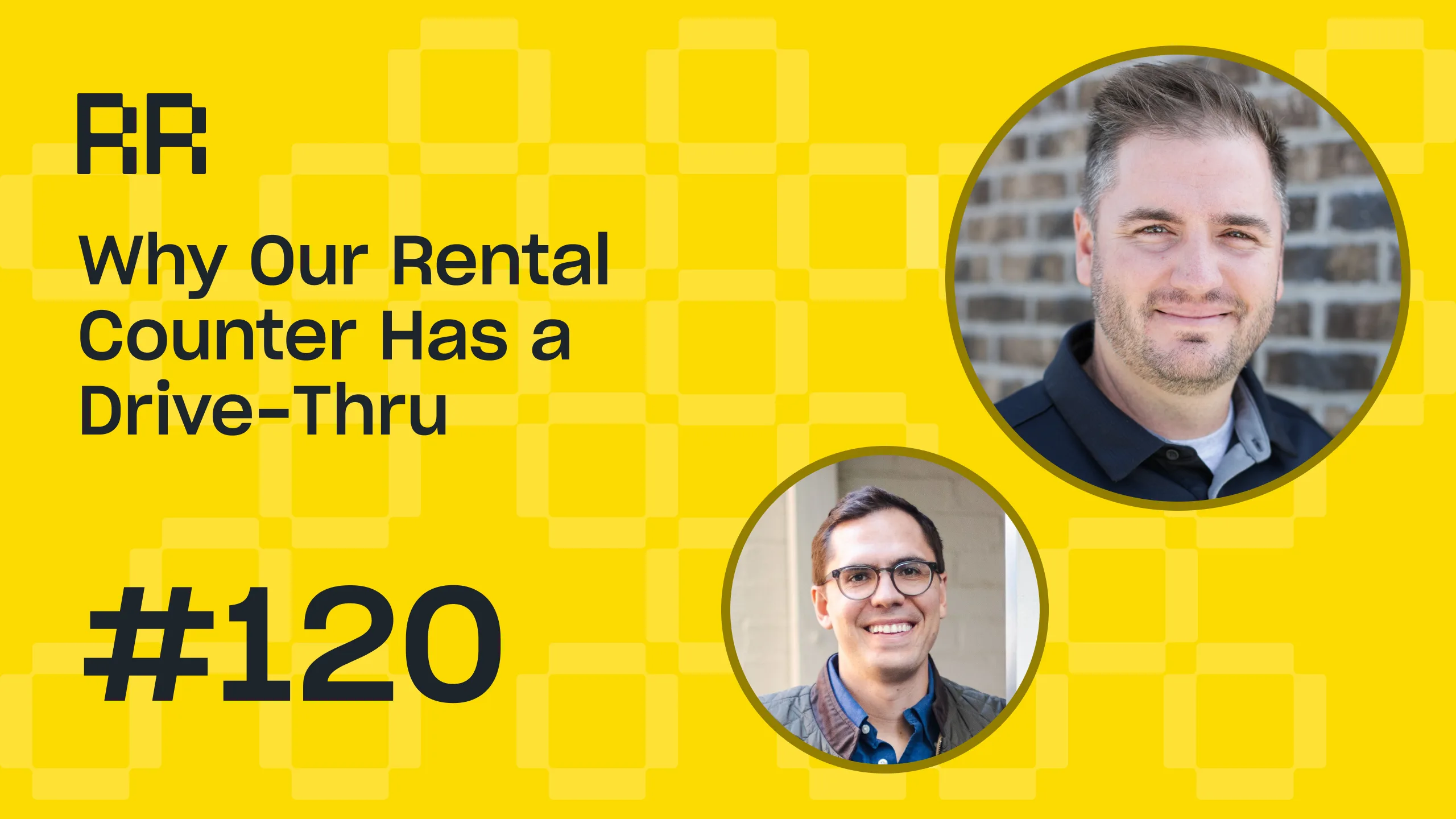
The fastest way to find out what is broken at your rental counter is to stand on the other side of it. Most operators never get that chance. Robert LeVar spent a decade as the customer before he ever became the rental company.
On episode 120 of The Rental Roundtable, I sat down with Robert LeVar, operations manager and partner at American Rental in Morton, Illinois, and one of Rental Management’s 2026 “12 to Watch Under 40.” Robert ran a landscape construction business for about ten years, rented constantly, and joined the rental side full time in 2015. Today he runs the general tool rental business and the lift and aerial side of American Crane & Aerial, alongside two other partners who lead the company’s other divisions.
We talked about the three-lane drive-thru that most of his customers now use, how rerents let him test a market before he writes the check, why the company runs seven separate P&Ls, and the advice from his board that keeps him focused. Here is what stuck with me.
Being the Customer First Shows You What Renters Actually Feel
Robert got his degree in horticulture because he wanted to be outside and do something different every day. He grew a landscape construction business, and along the way he rented a lot. He saw the value in not having hundreds of thousands of dollars worth of assets sitting there that he didn’t need to use every day.
He even met his future business partner through rental. In the winters Robert helped refurbish and repaint equipment, building up a rental credit so that in the summers he didn’t have to own chippers and stump grinders.
“You can have your rental operation and think you guys are doing everything right... but it’s really good to see the other side of it.” Robert LeVar, Operations Manager and Partner, American Rental, (5:55)
He pointed to a renter panel at the ARA Show a couple of years ago that was really eye opening: things rental companies think they do right turned out to be real pains for the customer. If you have never sat in the renter’s seat, find someone who has and ask.
Build the Counter Around How Customers Want to Move
One of the biggest lessons Robert took from COVID was that customers didn’t necessarily need to come into the showroom. So when they built their facility, they built a three-lane drive-thru. The first lane is an actual drive-through window, like you would see at McDonald’s or Starbucks. The next two lanes have speaker boxes, and the counter staff wear headsets. Contracts go out through DocuSign and payments through web payment links, so the paperwork is done before the customer pulls up.
I expected a small number when I asked how often it gets used. Robert said it is probably closer to 90%. The morning we recorded, about six vehicles were staged outside the gate before the 6:30am open. Customers get sent to a load lane in the yard, and the team comes out to take pictures before the rental goes out.
“It’s utilized way more than I actually thought it would be. I thought it was kind of sort of a gimmick in the beginning, but once we really started pushing people through it, it worked really well.” (9:27)
Part of the win is the visual. During COVID, people at their old facility would call and call without realizing five people were ahead of them. A line of cars makes the wait obvious. And convenience matters more than we admit: I skip the better bagel shop some weekends because it makes me walk inside. If you want another angle on meeting customers on their schedule, episode 110 gets into 24/7 rental lockers.
Tell Customers the Truth, Even When It Isn’t What They Want to Hear
As a renter, Robert showed up at rental companies to find the machine he was promised wasn’t ready, or was broken. So his team focuses on clear communication, which he called such a simple and easy thing to do that a lot of people miss. Over the holiday weekend, they told customers some mini skids had to be back before the 6:30am open because they were going right back out by 9 or 10am.
That honesty matters even more as they go after medium to larger construction companies.
“I know right now I can’t serve all your needs. So, I just want to tell you that I’m going to be a straight shooter.” (12:45)
If he needs an hour to source something or check on a repair, he says so. For an out-of-town contractor, time is money, and often nobody else calls them back. Stretching the truth might win a customer in the short run. Doing what you say you’re going to do is what builds trust over the long run.
You Rent Things, So Rent What You Don’t Own
Rerents have been huge for American Rental’s growth. They partner with OEMs, other rental companies, and distributors and resellers. Robert gave a great example: they are not big in electric booms, but a job a couple of towns over needed about a dozen of them. He called a colleague, lined up a dozen 45-foot electric booms for six months, won the customer, and grew in that area.
“This is what we do. We rent things. So if there’s a will, if there’s a way to do it, we’re going to try to figure it out.” (15:35)
He flags the bigger customers he is chasing so the front counter knows to land those rentals when they call. When I asked why so many operators treat rerents like a four-letter word, he understood it: some companies have probably been burned by someone rerenting to go after their customers. His answer is to be open and upfront about who the customer is. They trade lifts and other equipment with local companies all the time, because everyone is just trying to keep their customers happy.
Test the Market Before You Write the Check
Rerents are also a way to find out if demand is real before you spend the capital. Robert described it as a way to start dabbling in a market when you are not sure you want to make the investment, a great way to get your feet wet and see if you can make something of it.
Two of their tests didn’t take. A local dealer kept telling them they were missing the boat on vac trailers, so they rerented some and did a marketing push, but there wasn’t enough need, and they never made the purchase. They also ran spider cranes for about eight months. Their market is older school, and some of the older guys would rather stick with what they know, even when the new technology would make the job easier. That is a cheap lesson compared to owning a fleet that sits.
When they do buy, it is planned. Most purchasing happens at the ARA Show in February, with budgets done and a list mapped out from their missed rental reports. A capex line of credit covers opportunities during the year, like a bridge crew that needed 15 jackhammers for a six-month job. Bigger assets are usually bought used out of another rental fleet, event gear is usually new, and JLG factory-reconditioned units sometimes carry a better warranty than new. The through line is focus: grow in a few areas every year instead of trying to grow everything really quick.
Give Every Division Its Own P&L
Most rental companies pick a lane: equipment or events. American Rental runs general tool rental, an event business, cranes, aerial, trucking, a shop, and a small towing business. That is seven QuickBooks accounts, and each division has its own P&L.
It sounds like overkill. It isn’t. Each leader gets monthly reports plus a trailing 12. Robert shared a time expenses were racking up in one division, and it turned out the event warehouse was repalletizing and rebranding everything.
“That makes sense, but when it’s thrown into... one big bucket, it can be deceiving sometimes.” (27:57)
Separate books also keep managers accountable for their own overtime and expenses. For years the company ran on gut feel, and some calls bit them in the tail. Now they lean on the data, with one warning from Robert: put junk in and you get junk out, so log your missed rentals. Getting that visibility in real time is exactly why we built Quipli to keep your rentals, inventory, and payments in one place, and it is a theme we dug into on episode 107.
Hire for People Skills and Teach the Rental Part
On any given day there are 50 to 55 people in their building. Early on Robert wore every hat. Now, as he put it, the hat is not completely on his head. A lot of that came from hiring people with strong leadership and customer skills from industries like automotive and hospitality, then teaching them rental.
“It’s not rocket science. It’s not brain surgery. You know, we’re professional sharers. We share something with you and you bring it back. Hopefully not broken or destroyed.” (29:59)
They spend more time with each other than with their families, so they might as well have fun and do work they are proud of. When something goes wrong with a customer, they bring it to the whole team and ask what went wrong and what went right, instead of singling out the person who handed over the wrong auger bit.
Robert welcomes getting called out himself. John Wooden said the star of the team is the team. I’m not from rental either, and anyone willing to learn can pick up this business.
Just Because You Can Doesn’t Mean You Should
I close every episode by asking for the best career advice a guest has received. Robert went back to a line one of the members on their board always says: just because you can doesn’t mean you should. He can do a lot of things in the business, but that doesn’t make it the best use of his time or resources. He applies it to the business, too. Just because he can do event rental doesn’t mean he should, which is why each partner leads their own divisions and trusts the team to run them.
“Sometimes you’re the biggest roadblock in your own business and you don’t even see it.” (33:49)
Focus is the superpower. It feels backward, but the more you laser in, the faster you grow. Step back, find where you need to be, and surround yourself with good, positive people. At Quipli, we built our platform and Quinn for operators like you, so more of the busywork is handled and your time goes where it counts. If that is the kind of focus you want this year, come see it in action.