

Most second locations get talked about for years before anyone signs a lease. At Dot’s Rentals & Sales, the family talked about it for a long time too. Then Dot, who started the company in 1988, did what she always does at the end of a long coffee conversation: she declared the talking done.
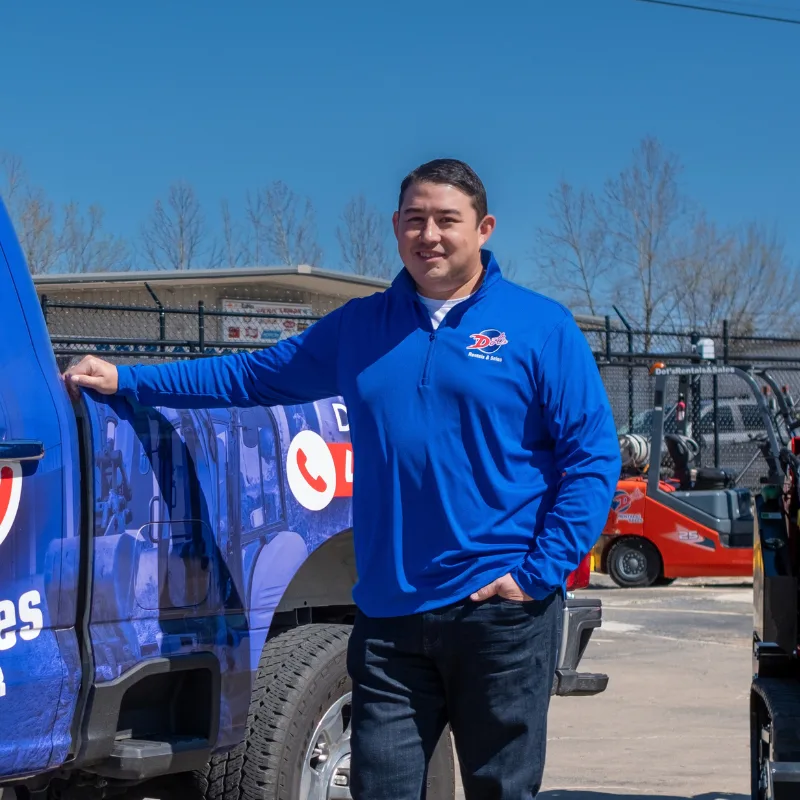
On episode 121 of The Rental Roundtable, I sat down with Nic Liu, Dot’s grandson and the director of business strategy at Dot’s Rentals & Sales. Nic grew up around the family store in Texarkana, then spent about a decade at Walmart and about five years at Samsung before coming home to open Dot’s second location in Northwest Arkansas with his brother, roughly seven months before we recorded. His sister Claire joined me on episode 81, so this is the next chapter of that family story.
We talked about what corporate America taught him, the ladder lesson from his first month, and how his family keeps its core values fixed while everything else evolves. If you are thinking about a second location, this one is worth your time.
Bring the Big-Company Discipline Home
Nic was born in 1989, when the store was about a year old. He spent a couple of summers on the back dock doing oil changes and greasing equipment, but never spent much time actually in the business.
After attending the University of Arkansas, he joined Walmart’s leadership program, worked in financial planning for electronics categories, and eventually moved into buying: TVs, audio, connected home, basically everything in the space. After about ten years, he felt like he wasn’t learning or growing anymore, so he went to the other side of the table at Samsung, working for an old vendor of his. He described it as losing a lot of power and learning to listen to the customer, very similar to rental.
When I asked what translated from corporate life to a smaller rental company, he pointed to two things: leadership and process.
“You’ve got 5,000 Walmart locations. In order to effectively run those, there has to be process. You can’t just let every store manager do what they want to do and hope for the best, there has to be some discipline there.” Nic Liu, Director of Business Strategy, Dot’s Rentals & Sales, (7:13)
There is a lot more freedom in a family-owned business, but Nic said leadership can make or break a business going from one to two to three locations, and the family is putting process in place so they can scale past two.
Not Knowing the “Right” Way Can Be an Advantage
I asked Nic whether he is a better rental operator for not going straight into rental. His answer was honest: if he and his brother had spent their formative years in the store, they would have known things that kept them from certain mistakes in the first seven months.
But there is another side to it.
“There’s a lot of things that we challenge that have been done a certain way for so many years just because we don’t know any better.” (8:39)
Some of those challenges have turned into processes the family is now taking back to the Texarkana location. Nic also leans hard on how open this industry is. At the CFO summit where we had dinner, he didn’t know anyone in the room and spent it asking questions. He told me he steals shamelessly from this podcast: Brett Baker’s attention to detail on equipment care from episode 52, and Grant Christopher and Josh Nickell on empowering employees to make mistakes from episode 98.
Having worked at a company doing about half a trillion dollars in revenue, Nic knows how hard change is at that scale. The independents’ real competitive advantage, he said, is being able to move quickly and act on market changes and customer needs without turning a billion-dollar ship.
Let the Customer Correct Your Fleet
The second location was a long time coming. The family knew Dot’s had a winning formula, which is why the biggest hurdle was convincing Dot to add another location. Dot holds onto some old-school principles that have served the company well: don’t overextend financially, and never stretch so far that you can’t take care of the customer. Her biggest question was who would run it.
Nic gave a lot of credit to his support system. His wife, who has worked at Walmart for 15-plus years, backed the move. His mom, grandmother, and sister helped guide them, and his younger brother Harrison agreed to leave Denver to help open the store. They found a centrally located property in Northwest Arkansas at a cost Nic still can’t quite believe, and leaned on Dot’s 40-plus years of experience with multiple phone calls and trips to Texarkana to hash out the fleet.
Not every piece of her advice landed right away. Dot told him they needed ladders. Nic figured anyone could buy a ladder at Home Depot, so they skipped them.
“And then, sure enough, that first month, I think we had like four or five calls about ladders.” (17:11)
They pivoted quickly and bought ladders. The lesson is about listening. A new location tells you what it needs if you pay attention to the calls you can’t fill. That is exactly the kind of signal good rental software should capture, so the next purchase is based on real demand instead of a hunch.
Hire One Seat at a Time
Seven months in, Nic named two big challenges. The first is fleet. They opened with a base level of general tool fleet and let the market dictate where to go next. It helps to have a 13-acre sister location with plenty of fleet; in the month before we recorded, Nic made three or four trips to Texas to pick up equipment. The bigger shift was realizing they couldn’t serve anybody and everybody. They had to find their target customer and align the fleet to them.
The second challenge is knowing when to hire. Right now it’s Nic, his brother, and a mechanic who helps manage the yard. On any given day Nic is the delivery driver and the wash bay, and his brother is covering delivery, wash bay, and the front counter. Great for learning, but it starts to bottleneck.
“We’re not going to go hire a full team. It’s one person here, one person there, and what is that right next position to hire?” (21:56)
There is a twist here, too. With three people, changing a process is easy. Taking that same process back to Texarkana, where there are 25 to 26 people, is a much bigger undertaking. Usually, Nic said, he throws it over to Claire to figure out. Fleet and headcount both come down to capital allocation: every independent has limited resources, so the question is which bet to make and when.
Keep the Core Values Sacred and Everything Else on the Table
So how do you honor 35-plus years of what has worked while still trying new things? Nic borrowed a frame from Walmart, where leadership would talk about what Mr. Sam would think of the company today.
“The only thing that’s sacred in this company is... our core values, right? So like those core values, they won’t change. That’s who we are. That’s our DNA.” (24:35)
Everything else, the process for delivering those values to the customer, is very fluid and should always change. Nic said the family shoots new ideas to his mom and grandmother probably daily, and they never just say no. There is always a conversation.
One of the biggest changes was switching rental software after having the previous system since 1989. It wasn’t easy, but everyone agreed you have to do the hard things to make progress. We see this up close at Quipli, and timing matters: most of our launches happen in the slower winter months. Don’t change software, open a location, and overhaul your fleet all at once. Nic’s answer is a plan, with everyone aligned and skating the same way.
Two Leaders, Two Strengths
Growing up, Nic just assumed women ran rental companies, because that is what he saw. His grandmother Dot and his mom, DeMita, are very different leaders, and that is the point.
“They complement each other so well, you know, ’cause mom’s really good at taking care of the employees and making sure that everybody feels seen and heard. And Dot’s really good at getting stuff done.” (29:39)
Dot is headstrong, direct, and candid. You never have to wonder where you stand. Dot’s has been around for almost 40 years, and Dot was in rental for over 25 years prior to that. Nic said there is never a stranger who walks through that door, and he has never met anyone with such universal appeal.
That is where the customer focus at the new store comes from. Nic said the key to their success so far is taking care of every single person who steps in the door, and that he picked it up almost through osmosis from growing up around Dot. The nationals have bigger budgets. You have the people at your counter.
Get the Talking Done
I close every episode by asking for the best career advice a guest has received. Nic said it is less advice and more a mantra. The family has coffee with Dot often, and that is where a lot of the business discussion happens. Eventually Dot gets ready to head to the store, cuts everyone off, and says something like, “All right, now that we’ve got the talking done with.” It’s her way of saying she needs to go take care of customers, and that at some point you have to stop discussing what-ifs and roll up your sleeves.
“We can plan, dream, have visions of stuff all day long, but until we roll up our sleeves and do it, nothing’s going to happen.” (32:41)
That is the whole episode in one line. Take care of the customer, keep your values fixed, plan the work, and then go do it. At Quipli, we built our platform and Quinn for operators like you, so the busywork gets lighter and more of your time goes to the counter and the yard. If your next location is moving from talk to action, come see it in action.